ISLAA Spotlights is a series of focused presentations that highlight pivotal works from the collection across our programmatic spaces. These displays create opportunities for close engagement with artists and ideas that remain underrepresented in dominant art historical narratives, offering a platform to explore individual practices in greater depth. Spotlight presentations are open during select hours and by appointment.
To inquire about a tour or visit, please contact us at info@islaa.org.
* * * * *
The Institute for Studies on Latin American Art (ISLAA) is pleased to present a Spotlight on the work of Bernardo Krasniansky (1951, Asunción, Paraguay–2021, São Paulo, Brazil), focusing on a group of works produced in São Paulo during the late 1970s and early 1980s that explore the plastic possibilities of Xerox technology. Through a practice that combines drawing, mechanical reproduction, and conceptual experimentation, Krasniansky developed a body of work that interrogated the role of images at a time when artists across Latin America were rethinking the role of art amid political constraints and technological transformations.
Bernardo Krasniansky emerged from one of the most repressive political environments in twentieth-century Latin America. Alfredo Stroessner seized power in Paraguay during a coup in 1954, and his dictatorship lasted until 1989, making it one of the longest in the continent’s history. In 1969, a decisive turning point in Krasniansky’s life and career occurred when his participation in the 10th São Paulo Biennial introduced him to the Brazilian art scene and allowed him to relocate to São Paulo. During this time, Brazil was also under a military regime, from 1964 until 1985. The dictatorship maintained a complex apparatus of censorship and surveillance while systematically persecuting dissenters.
Photocopiers, offset printing, and other forms of inexpensive reproduction enabled artists to create works that could circulate quickly and informally, bypassing traditional exhibition structures and evading censorship. The photocopy, in particular, offered a medium that was affordable, accessible, and difficult to trace. Originally invented in 1959 by Chester Floyd Carlson, Xerox photocopying systems rapidly spread across corporate offices and bureaucratic institutions, becoming an everyday technology associated with administrative reproduction. Artists repurposed photocopy processes to produce mail art, visual poetry, and artist publications that circulated through alternative spaces beyond galleries and museums.
The Xerox machine also became central to Krasniansky’s practice. Rather than using it to merely reproduce preexisting drawings or photographs, Krasniansky treated the medium itself as a drawing instrument. Working directly on the glass surface of the copier while the device was operating, he intervened in the mechanical process at the very moment of image formation. Using the machine’s ability to enlarge or reduce images and manipulate tonal contrasts, he produced what he described as a form of “direct drawing.”
Through this approach, Krasniansky explored the unstable boundary between drawing, photography, and mechanical reproduction, often relinquishing control. In many of his works, he placed parts of his own body—his hands or his face—directly onto the surface of the photocopier, generating images that blur the lines between photographic record, physical imprint, and performative gesture. The resulting works collapse distinctions between original and copy. Imperfections, tonal variations, distortions, the texture of the paper, and the grain of the photocopying process became integral components of his work.
Krasniansky’s experiments with Xerox technology materialized in dialogue with international developments in Conceptual art. In 1968, curator and publisher Seth Siegelaub edited the publication known as the Xerox Book, a project in which artists including Joseph Kosuth, Sol LeWitt, Lawrence Weiner, and Robert Barry produced works directly through Xerox machines. The publication established the photocopy as a legitimate artistic medium within Conceptual practice and emphasized the circulation of information rather than the uniqueness of the art object. Whereas the artists in the Xerox Book primarily used the photocopier to reproduce conceptual instructions or graphic elements, Krasniansky focused on using the machine as a site of drawing itself, intervening in the copying process to generate images that would appear only through the act of reproduction.
This experimentation unfolded within a dense network of artistic exchange under the umbrella of international conceptualism. A node in this network was the Centro de Arte y Comunicación (CAYC) in Buenos Aires, one of the most influential platforms for experimental art in Latin America during the 1970s. Under the direction of critic and curator Jorge Glusberg, CAYC functioned not only as an exhibition space but also as an active generator of international dialogue. Through exhibitions, publications, and collaborative projects, CAYC connected artists from across Latin America with those in Europe, Asia, and the United States.
Krasniansky’s relationship with CAYC played an important role in his artistic trajectory. Through its initiatives, he became integrated into the movement known as Arte de Sistemas, a theoretical and curatorial framework that approached art as a set of interconnected processes rather than as isolated objects. In 1975, Glusberg organized a solo exhibition of Krasniansky’s work at CAYC in Buenos Aires, positioning him within a broader constellation of artists exploring systems, communication technologies, and Conceptual strategies. Krasniansky’s participation in CAYC’s projects allowed his work to be shown internationally at a time when many Latin American artists faced limited institutional support in their own countries. Meanwhile, he maintained close connections with artists and intellectuals in São Paulo who were exploring the possibilities of similar technologies. Between 1979 and 1982, he developed a relationship with the experimental group 3NÓS3, formed by Hudinilson Jr., Rafael França, and Mario Ramiro.
The works presented in this Spotlight reveal a range of operations across Krasniansky’s practice, including interventions with colored pencil, the direct use of his own body, and shifts in the color of the paper itself. When speaking about these works, he referred to some of them as “image over image,” a formulation that points to their layered nature. Embedded in this process is an understanding of the image as possessing an open, potentially infinite quality, where temporality becomes unstable rather than fixed. For instance, some works initially produced in 1978 were photocopied again in 1980, allowing them to re-emerge in a different context. In this sense, the works do not belong to a single point in time but unfold across multiple instances of production, existing through repetition and reactivation. According to Ticio Escobar, Krasniansky’s Xerox works can be understood through what Walter Benjamin described as “dialectical images”: moments in which past and present collide, producing a charged field of historical meaning.
Krasniansky’s work occupies a crucial position within the histories of Paraguayan and Latin American art, not only for its formal innovation but also for the way it expands the understanding of what an image can be under conditions of constraint. By working within a bureaucratic system as a site of art production, he created a space where drawing, reproduction, and temporality converge in unstable and generative ways. His practice resonates with broader Conceptual developments across the region while remaining deeply attuned to the specific political and material realities of his context. Today, his Xerox “direct drawings” can be understood as a body of work that continues to challenge notions of originality, authorship, and time, while asserting the capacity of images to transform and circulate beyond the limitations imposed upon them.
—Micaela Vindman
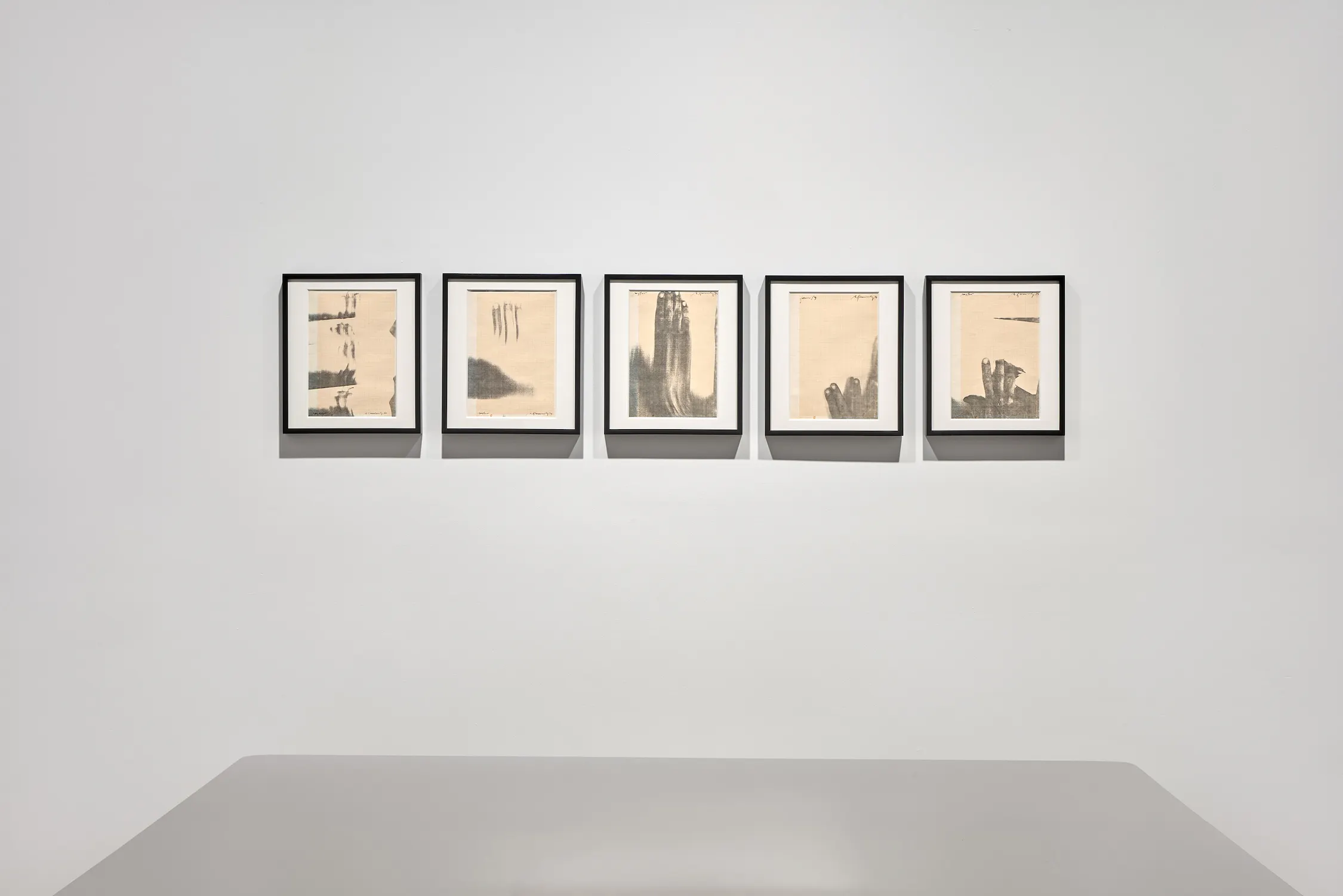
Installation view of Spotlight: Bernardo Krasniansky, ISLAA, 2026. Photo: Marc Tatti
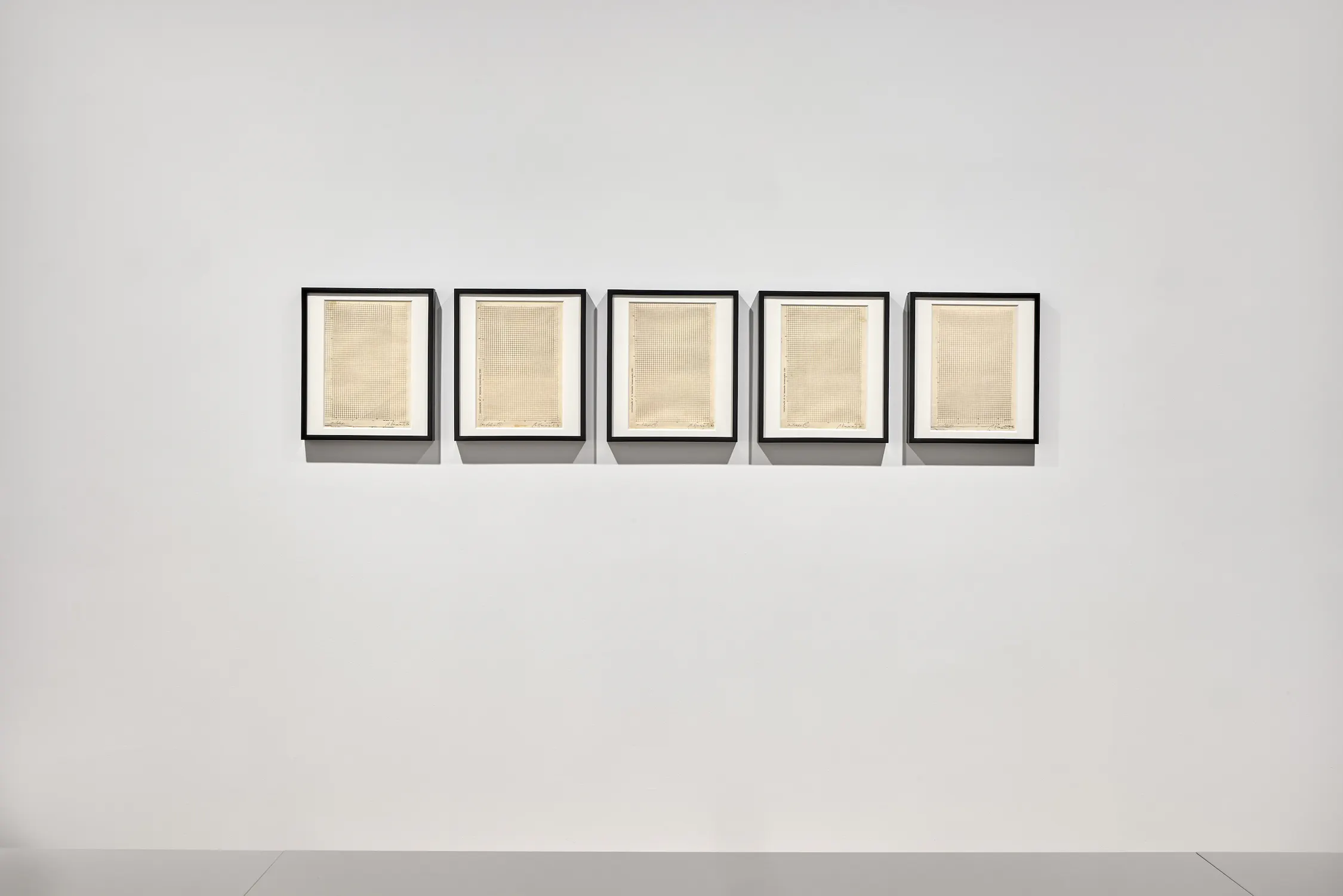
Installation view of Spotlight: Bernardo Krasniansky, ISLAA, 2026. Photo: Marc Tatti
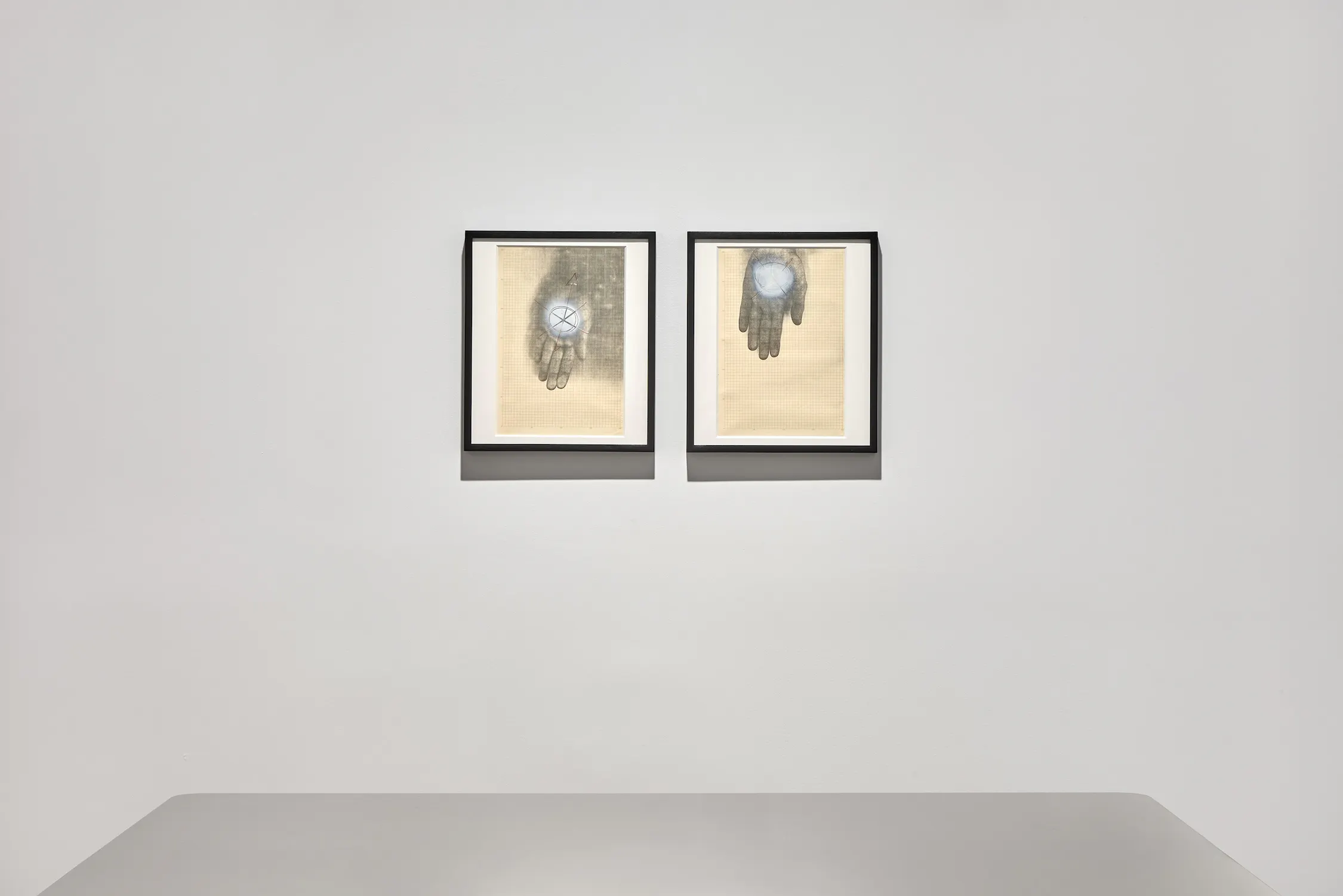
Installation view of Spotlight: Bernardo Krasniansky, ISLAA, 2026. Photo: Marc Tatti
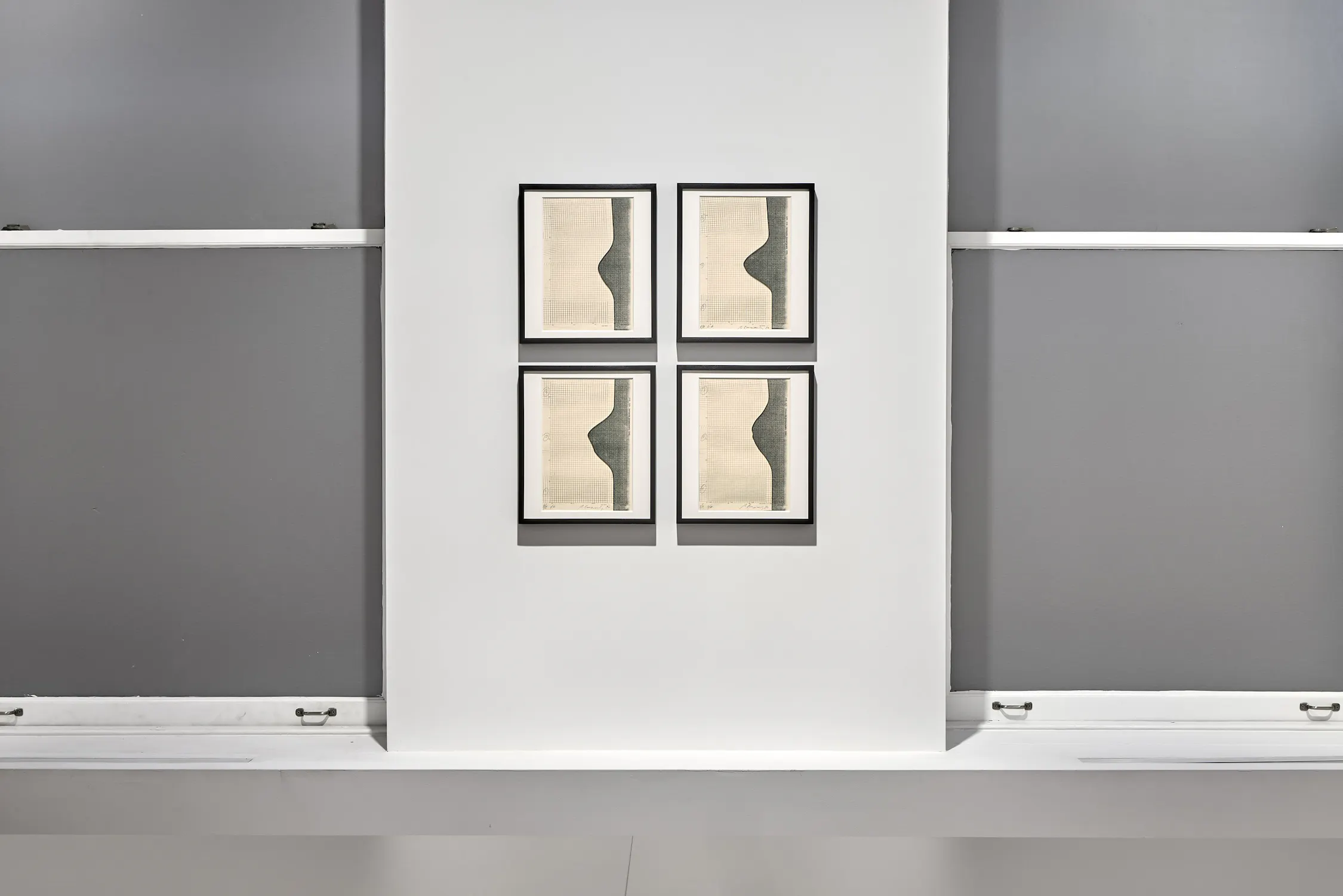
Installation view of Spotlight: Bernardo Krasniansky, ISLAA, 2026. Photo: Marc Tatti

Micaela Vindman is an architect and curator from Argentina based in New York City. She is the 2025–26 curatorial fellow at the Institute for Studies on Latin American Art (ISLAA). She has contributed to curatorial and research projects at the Jewish Museum, Triple Canopy, and Isla Flotante, and previously held the position of Artistic Director at Revolver Galería. She holds a professional degree in architecture and an MA in curatorial studies from the Center for Curatorial Studies, Bard College.