ISLAA Spotlights is a series of focused presentations that highlight pivotal works from the collection across our programmatic spaces. These displays create opportunities for close engagement with artists and ideas that remain underrepresented in dominant art historical narratives, offering a platform to explore individual practices in greater depth.
Spotlight presentations are open during select hours and by appointment. To inquire about a tour or visit, please contact us at info@islaa.org.
* * * * *
"Like many important artists who arrived from other parts of the world and settled here to Mexico’s benefit, Kazuya Sakai has produced during his ten years of residence a strong pictorial oeuvre that has reverberated in our scene and has exercised a healthy influence on young artists. But the incorporation of Sakai into Mexican art extends to our culture in general, thanks to his magnificent activities as a university professor, writer, conferencist, translator, editor, and expert in jazz music. Sakai’s strong personality, his talent, and the great aesthetic quality of his painting have caused three countries to claim him: Argentina, the country of his birth, Mexico, his chosen home country, and Japan, the country of his familial descendance."
—Fernando Gamboa
Director, Museo de Arte Moderno de la Ciudad de México
* * * * *
Kazuya Sakai (b. Buenos Aires, 1927–2001) was a Japanese Argentine artist whose vast and multi-faceted artistic practice included computer-generated art, electronic music, drawings, and sculptures. The most prominent part of his work consisted of captivating abstract paintings that ranged in style from geometric to gestural and lyrical. He graduated with a degree in literature and philosophy from the Waseda University in Japan, where he lived with his family in the 1930s, but never received a formal artistic education. In 1952, one year after his return to Argentina, Sakai had his first solo exhibition at Galería La Cueva, marking the beginning of a long career that spanned multiple countries.
In 1963, Sakai moved to New York City alongside other Argentine artists such as José Antonio Fernández-Muro and Sarah Grilo. During his two-year stay in New York, Sakai’s work was presented at Galería Bonino in two solo shows in 1962 and in the groundbreaking exhibition Magnet: New York, alongside twenty-three other Latin American artists in 1964. During this period, Sakai experimented with oil and acrylic paints, watercolor, and collage. In 1965, he moved to Mexico City and worked as a professor in the Asian Studies Department at El Colegio de México. It was in Mexico, during the late ’60s, that Sakai’s paintings began to transition from lyrical to geometric abstraction, trading his dark gestural shapes for tight strokes and rigid color fields. While in Mexico, he also worked as the managing editor and artistic director of the art and literature magazine Plural, directed by Octavio Paz. In the 1970s, Sakai moved to Texas, where he would spend the final twenty-four years of his prolific career working as a professor within the University of Texas system and organizing exhibitions for the Blanton Museum of Art.
The selection of works on view at ISLAA highlights the early period of Sakai’s career, from 1958 to 1962, during which the artist primarily produced gestural abstract paintings inspired by the forms of Chinese and Japanese calligraphy. The dark toned color palette of these rare and seminal works precedes the brightly colored geometric style Sakai is most known for. In these earlier paintings, Sakai transforms calligraphic forms into visual expressions aligned with the artistic philosophies of action painting and the New York School.
Sakai exhibited regularly in Mexico, Costa Rica, Argentina, Spain, Japan, and the United States. His work is preserved in numerous public collections such as the Museo Nacional de Bellas Artes, Buenos Aires; the Museo de Arte Moderno, Buenos Aires; the Museo de Arte Moderno de la Ciudad de México; the Museum of Modern Art, Tokyo; and the Blanton Museum of Art, Texas, among other institutions.
—Rebecca Miralrio
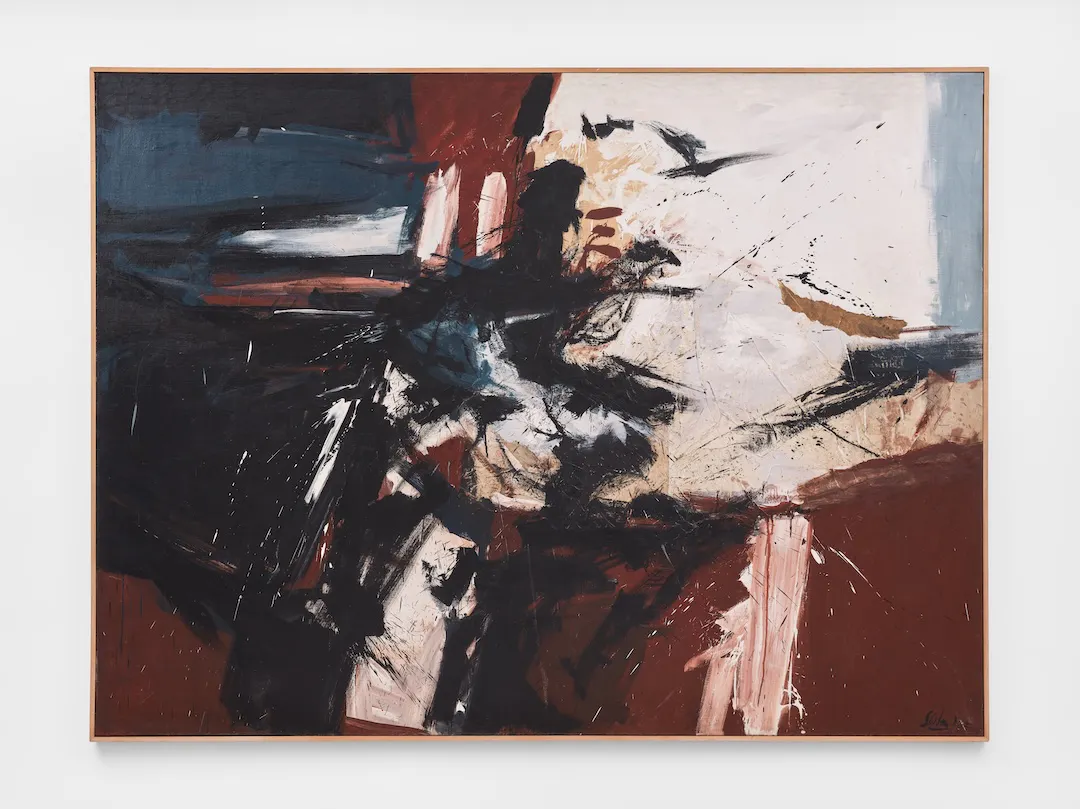
Kazuya Sakai, Untitled, 1962
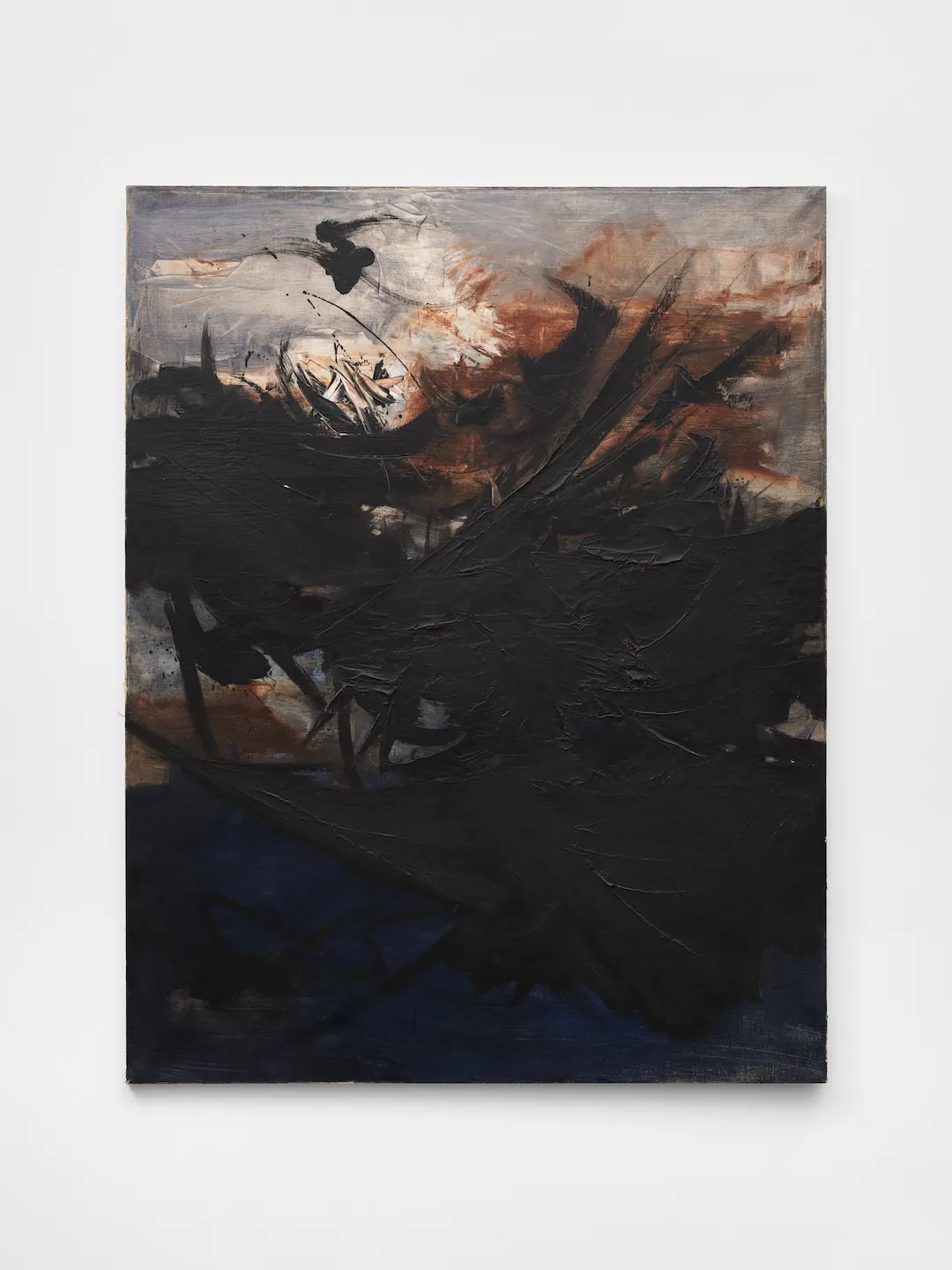
Kazuya Sakai, Pintura No. 94, 1960
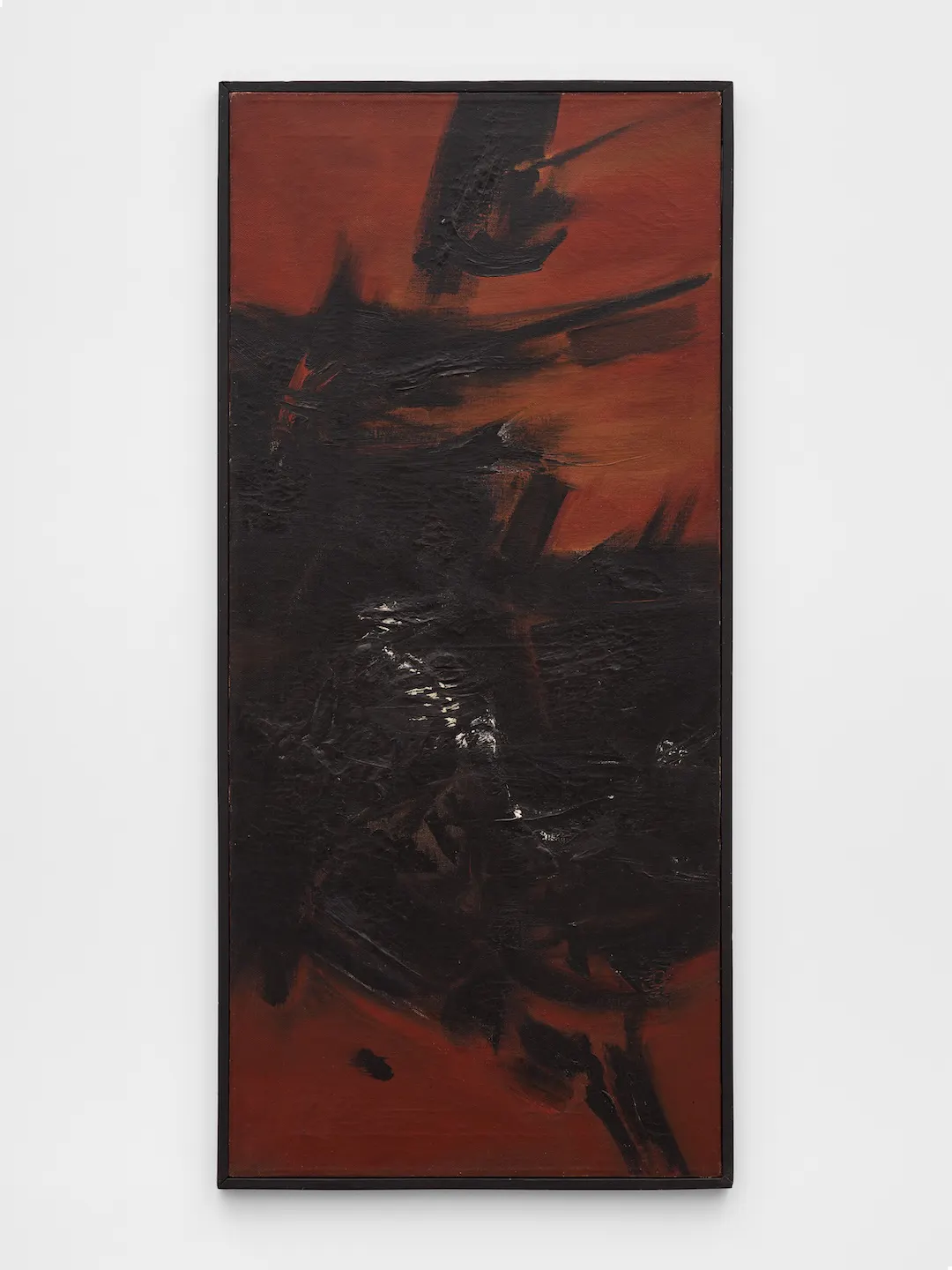
Kazuya Sakai, Pintura No. 17, 1961